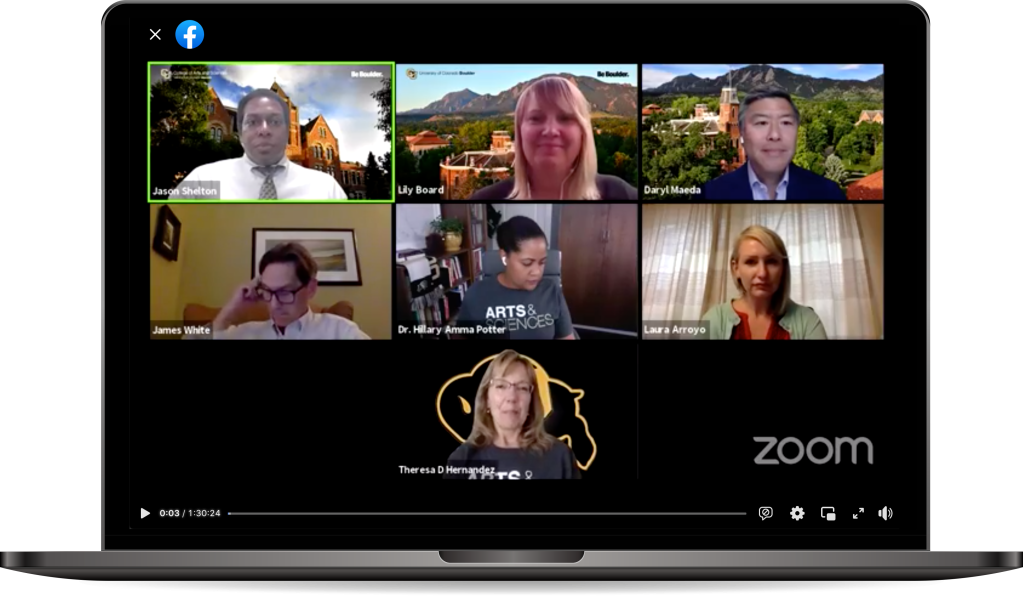

In summer 2020, I organized a series of town hall-style panels broadcasted live over Facebook for the University of Colorado Boulder’s College of Arts and Sciences (A&S). My goal was to generate clarity, given rising COVID-19 infections, about the academic experiences new students could expect. I also hoped to instill a sense of proximity to the college’s leadership.
The project was an excellent opportunity to blend marketing, public relations and UX writing to create digital experiences that were so seamless, they were invisible to users.
The event was well-attended and received positive reviews. Our panelists were outstanding, and the following narrative details the strategies I used to help them present their best.
Phase One: Discovery & Research
In late spring 2020, the A&S recruitment team, of which I am a part, noticed a growing number of students were hesitant to confirm their enrollment. After reflecting on our spring marketing tactics, we believed A&S could benefit from placing leadership in front of our prospective students and their families for a live Q&A. The College of Arts and Sciences’ executive leadership is quite strong and approachable. We felt that adding exposure would support the sense that they are available to answer constituent concerns.
To make it effective, though, our event would need to answer the vast majority of questions submitted over Facebook from as many as 3,500 expected viewers.
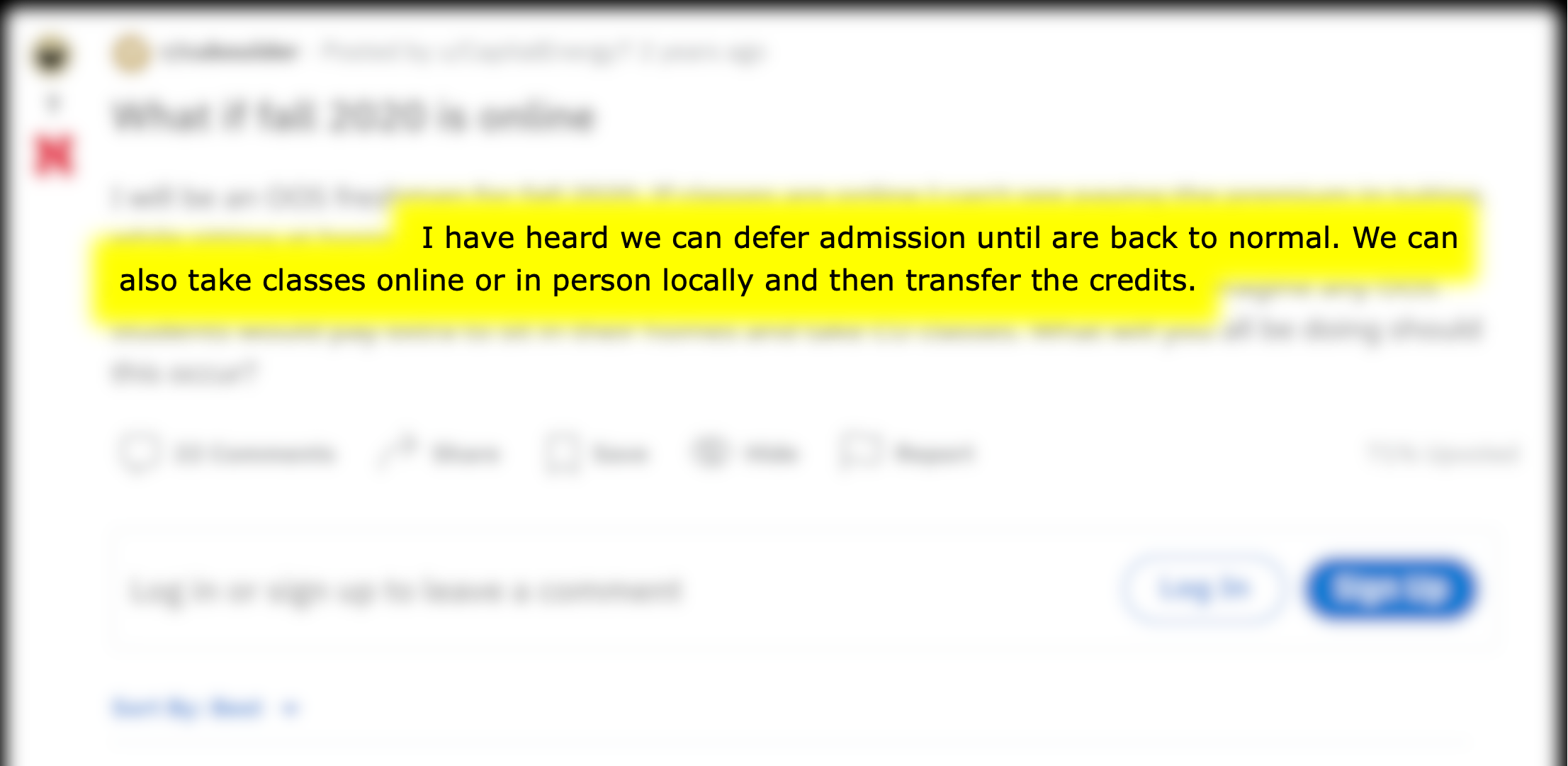
We further explored the issue by analyzing emails, meeting themes, texting exchanges, Reddit threads and relevant Facebook groups. Our inquiry found gaps in information that prevented students and families from feeling confident enough at that time to attend the University of Colorado Boulder. We were also able to identify topics of concern, such as housing, extracurricular activities, academic support and class experiences.
In separate interviews, I found that prospective students repeated questions with new phrasing and by asking “Are you sure?” Audiences appeared to want detailed answers from decision-makers who were closely familiar to each decision’s context and could better explain the university leadership’s rationale.
As part of my research, I critiqued other organizations’ live events and webinars that were broadcasted over social media. The majority followed a “talking head” format, in which experts take turns discussing content of interest. A weakness of this method was the unmonitored comment boards, on which users posted points of confusion.
Without active engagement, comments snowballed and the frustrated users left before the program’s end. At the worst, the events damaged the speakers’ trustworthiness. However, the format was chosen because it gave speakers the best opportunity to control their presentations and content.
I found a surprising model for live events over social media offered by the Denver Zoo. A zoologist introduced viewers to animals and a producer fed the zoologist questions from the Facebook comment board. The strategy made users feel like their questions were taken seriously, which led to seemingly high engagement and rates of viewers persisting to the end of the program.
Phase TWO: Strategy
By actively seeking gaps or weaknesses in our planning, though, we ran the risk of asking users to be frustrated with A&S and tee up a problematic audience. To prevent this, the gathering of feedback, event registration and interfacing with A&S’ Facebook page needed to be seamless.
My strategy was to create a digital experience in which viewers (i.e., users) could focus on the presentation’s content and allow our speakers to deliver strong answers in real time. We opted to run a closed Zoom meeting publicly broadcast over Facebook, because our panelists could focus on preparing answers as opposed to seeing in-meeting chats, raised hands or submitted questions.
Multiple academic advisors and academic coaches were scheduled to attend the Facebook broadcast and answer as many comments as possible. We planned to pull questions into a Googledoc, which the advisors and coaches would either answer or upvote to the panel. Our social media manager would then post answers to the comment board. Upvoted questions would be pasted in a separate Googledoc for the panel, color-coded by the person I felt could best answer.
This format created the appearance of answering questions in real time. However, panelists would be given significant time to prepare answers while other speakers responded to questions.
Phase THREE: Writing and broadcast
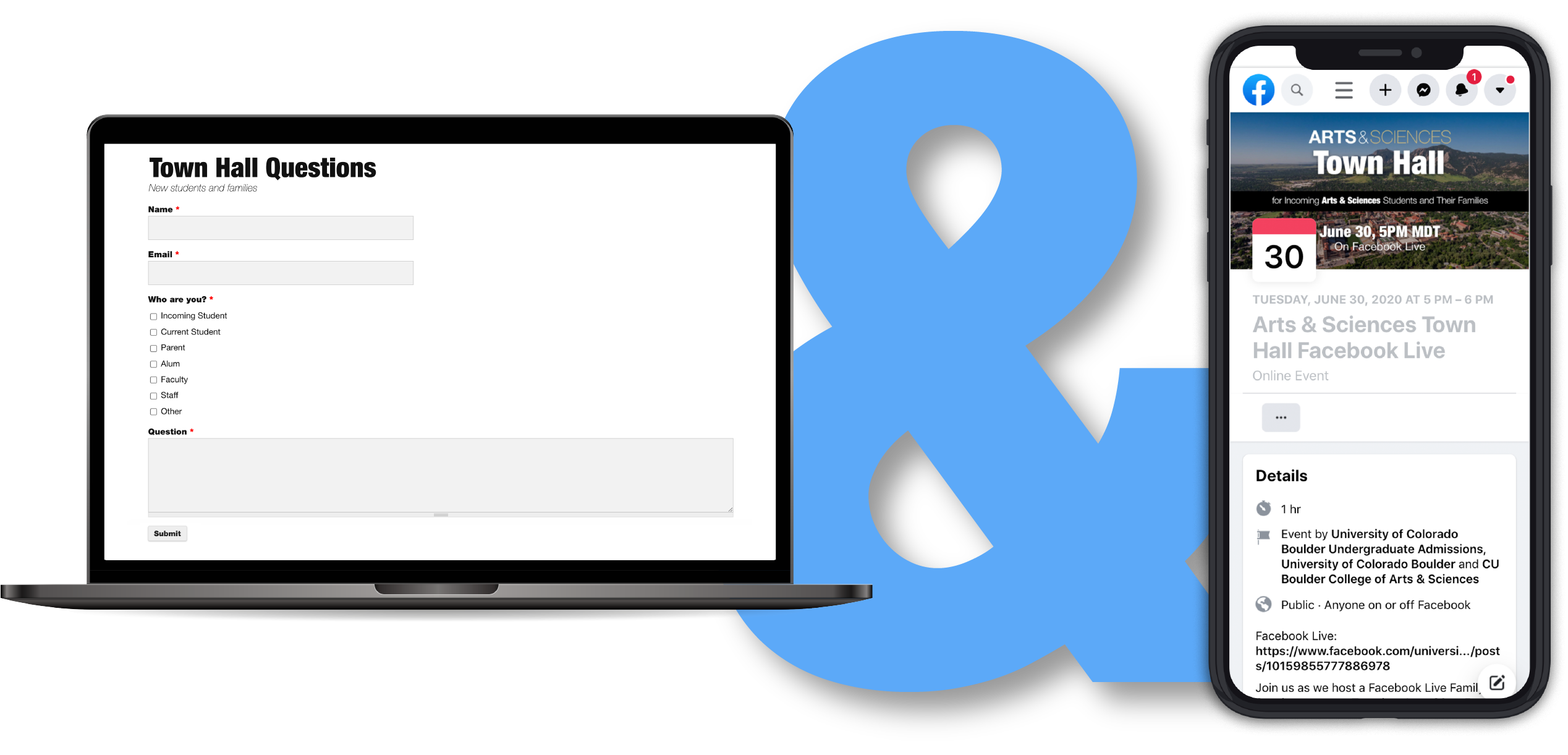
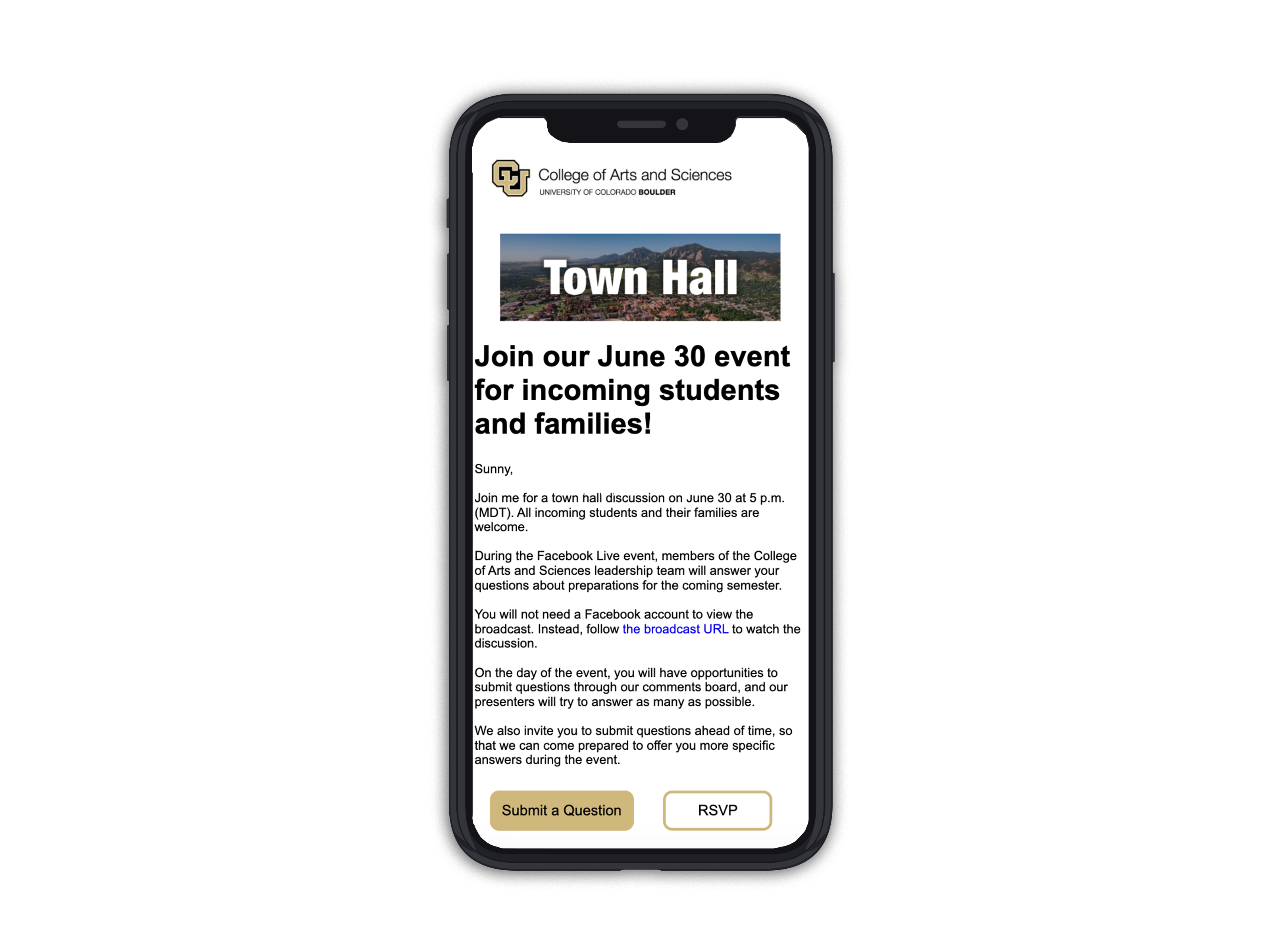
I wrote and designed a simple registration form that offered users event details, saved a preferred name and email address and offered registrants an opportunity to submit questions. An automated follow-up email thanked registrants and included a link to the broadcast URL and a webform through which users could submit further questions.
An automated followup email to the question form submission included the event URL and opportunities to save the event as an .ics file or within Facebook. We also included a link to a form through which users could submit further questions.
The panel facilitator was coached ahead of time on the user experience. I wanted him to mention the questioner’s preferred first name, which helped viewers know that questions were not internally written. We walked through the submitted questions and selected the highest priorities based on our initial research. Academic advisors and academic coaches answered the remaining questions directly over email.
On the day of the broadcast, we had our communications staff on stand-by to address issues of finding the event URL (there were none). During the event, our panel wrote comments to one another in the Googledoc when they felt they could offer stronger answers.
While we had a large team writing answers to user questions, our social media manager efficiently posted responses on the comment board. This made it appear like a single person or entity responded to users, and their answers aligned with the panelists’ responses.
By considering the UX of the presentation end-to-end, our team was able to pull off a positive event that was well-attend and received, despite contentious content.
Phase FOUR: follow up & Iterate

The live event garnered +3,600 views, 484 comments and 69 comment likes. Our team addressed 178 questions either live or by writing email responses within a few days of the event.
The tone remained positive and we were able to execute a strong experience by planning for trouble spots. We did notice several opportunities for improvement, such as consolidating question submissions in a single webform and directing users to the Facebook Live page on our first few email advertisements. We also generated a broader question bank to evenly distribute panelists’ answers.
On the whole, the seamless UX allowed users space to focus on the content and they felt like A&S engaged with their concerns. We received several affirming emails noting viewers felt able to make informed choices about their fall 2020 college experience.
The event’s success led our leadership team to replicate the social town hall model two more times that summer and in subsequent webinars and live events.
 Tim Grassley