About the Project
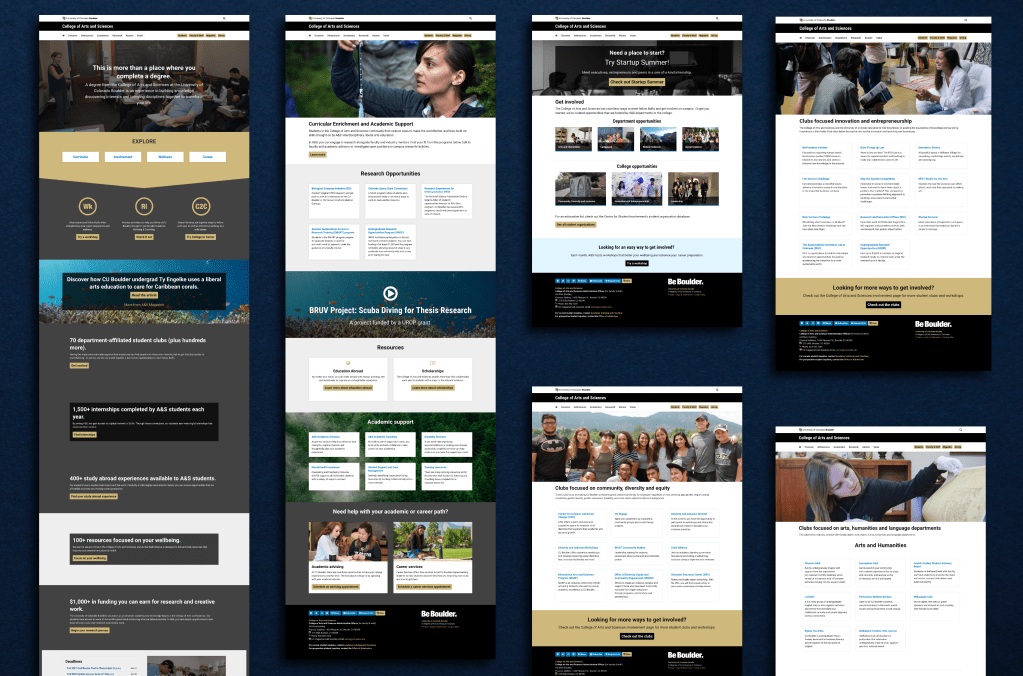
In late 2020, two units in the University of Colorado Boulder’s College of Arts and Sciences (A&S) asked our team to design an online resource that showcases curricular and noncurricular opportunities. Relying on user-centric design methods and agile project management, our team envisioned and designed a website that rapidly connects students to enriching experiences.
PHASE I: DISCOVERY AND RESEARCH
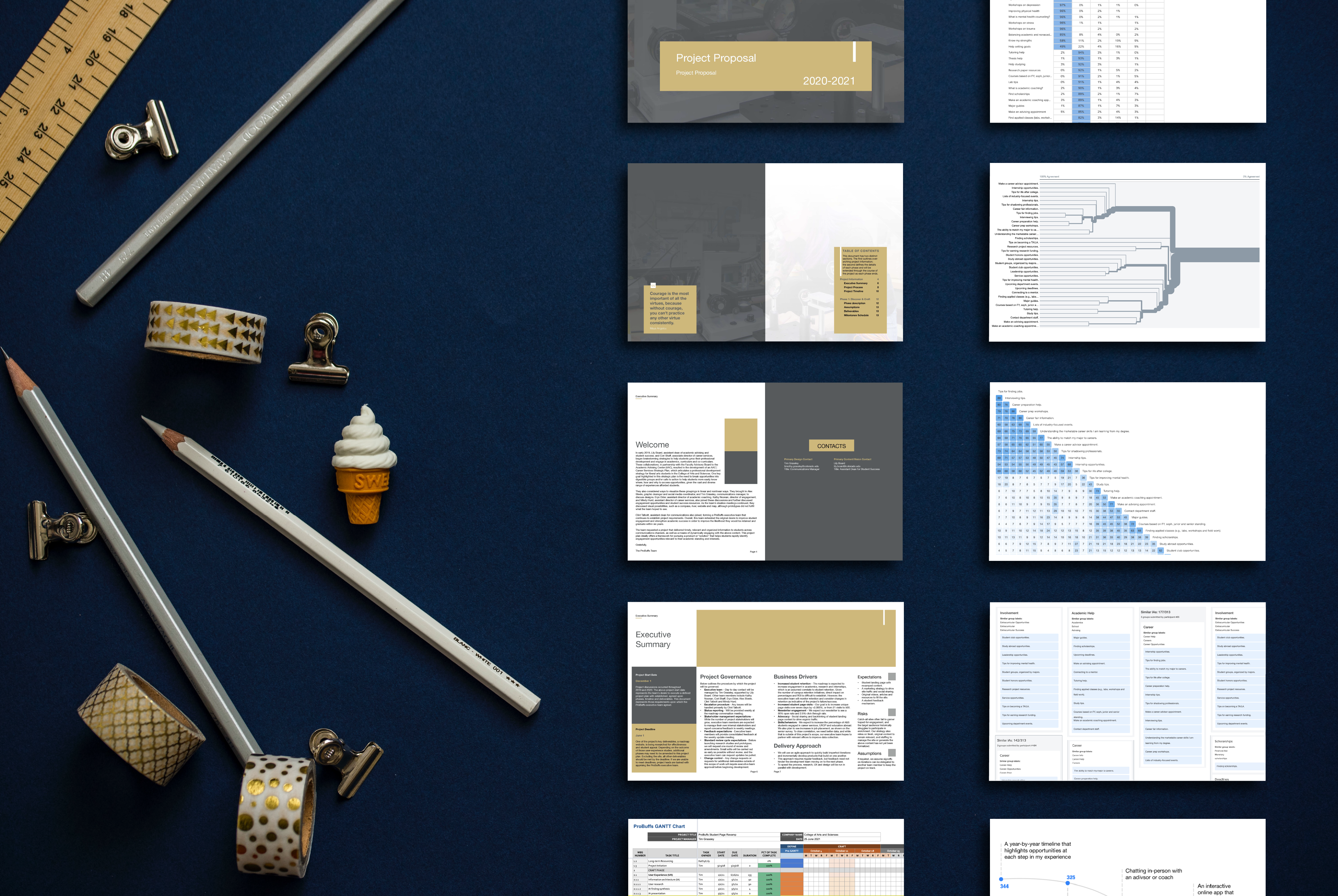
The two units proposed the project directly to our graphic designer because they had collaborated on individual designs the year prior. After multiple prototypes were rejected and progress slowed, our team decided that a formal project management approach could offer renewed momentum.
I proposed a phased digital project management lifecycle that riffs on Paul Boag’s agile project process. The change allowed us to research user needs and preferences first, which created space to measure, with data, the complexity of technology needed to meet the units’ vision.
Structured project management tied to a timeline also created breaks in feedback loops. The units strengthened their focus on gathering and prioritizing requirements, and our designer focused on generating the site.
For example, we immediately ran a requirements-gathering workshop and discovered the units wanted a dynamic web-based application that delivered individualized content based on students’ online behavior, demographics and interests. Their product vision required synthesizing data from three separate stacks, and A&S would need to purchase marketing automation software.
I organized interviews with students to test prototype solutions against their appeal and likelihood of use. Our data found that students primarily want to quickly find the information they want to find. While automation and personalization can effectively accomplish this, students also expressed that a strong website with clear taxonomy and seamless user experience met this end. The latter solution was also within the units’ budget.
Weighing and articulating the trade-off proved one of the project’s more difficult prioritization decisions. The units envisioned an advanced product that was beyond what they could afford, and they were not thrilled about, what felt like, simply building an effective but traditional website.
Our team benefitted from having student user stories and data that showed little difference in the likelihood of use and, in some cases, established user preferences for a website’s familiarity. While it was not their original vision, it met their foundational desire to improve students’ abilities to pursue a transformative education.
We organized a task analysis, open card sort and closed card sort, which produced data on how students categorize content and language that informed our taxonomy.

PHASE II: DESIGN AND DEVELOP
I drafted a comprehensive statement of work and GANTT chart based on Ben Aston’s Digital Project Manager templates. I also organized an agile development process that instituted regular design and development sprints. The deadlines gave our team a finite timeline and kickstarted our momentum.
During this phase, our graphic designer pursued a new venture, and I took on the project’s design duties in addition to being the project manager. As a first step, I worked with the units to discern what it was about websites that were not appealing.
They wanted to to strike an excited, innovative tenor that, they felt, websites lacked. Knowing that tone was critical, I found creative ways to flex the CMS’ design capabilities and my writing.
UX WRITING
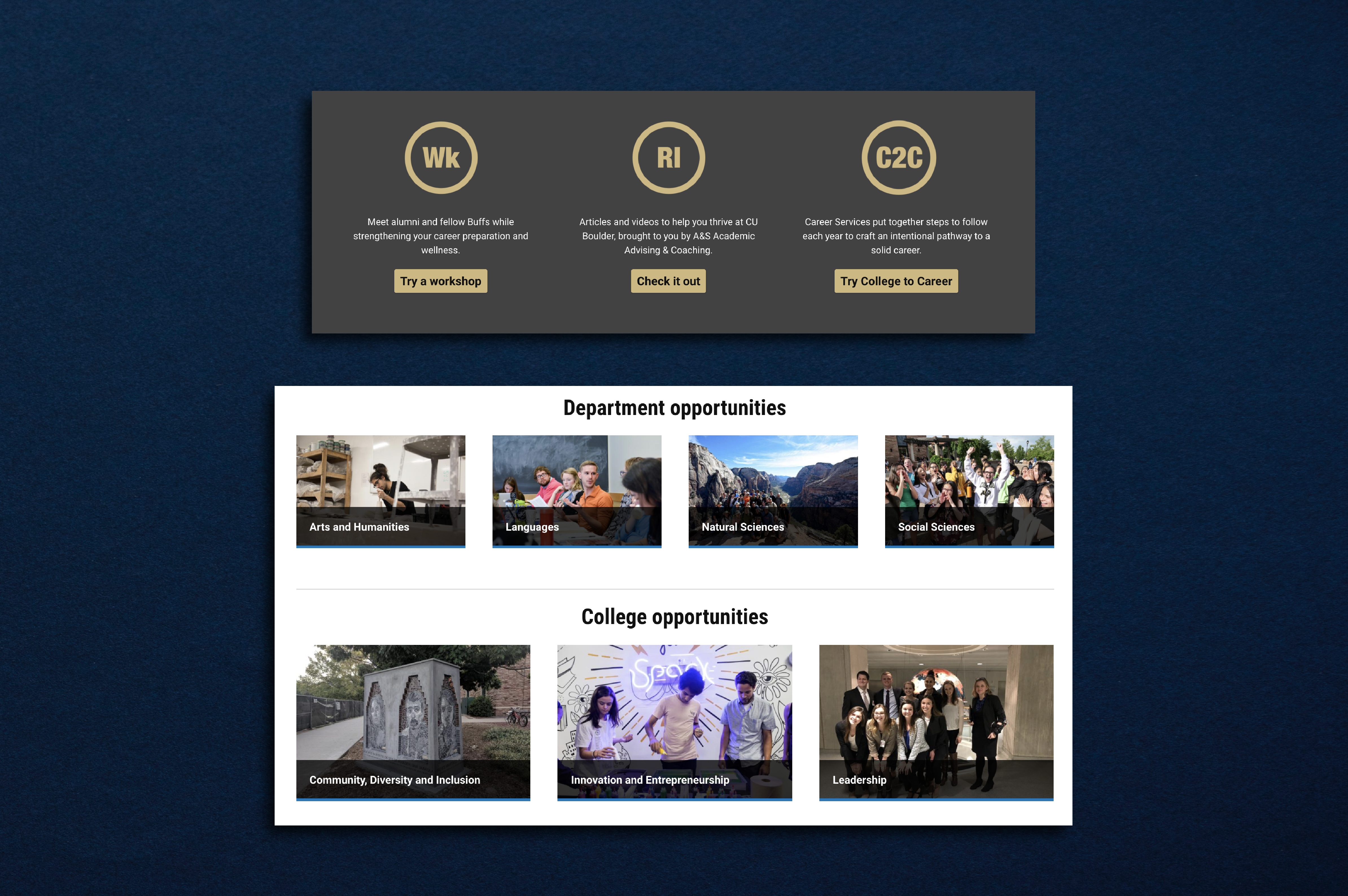
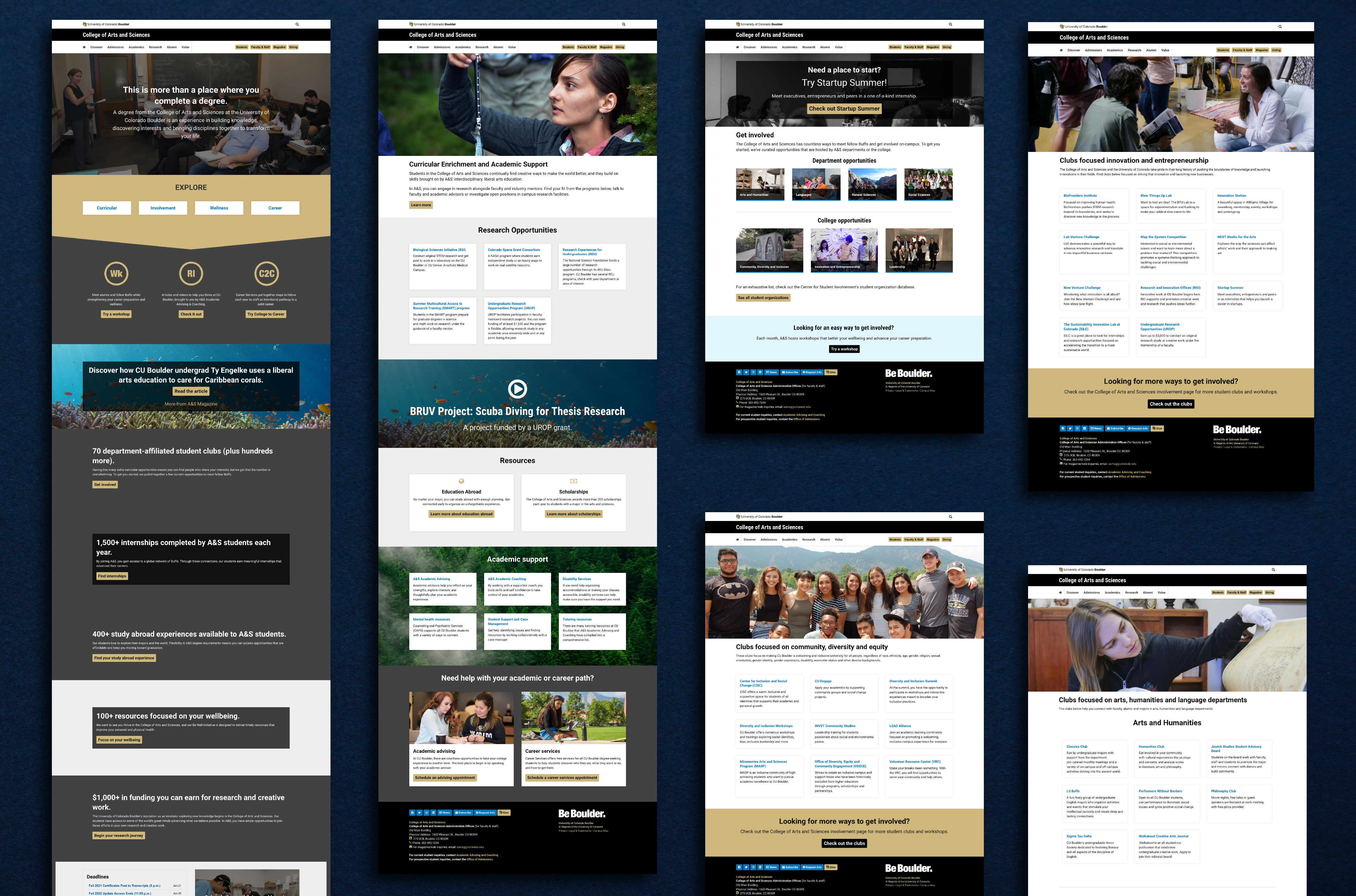
One challenge was the team’s desire for an experience in which users were awed by the quantity of opportunities available to them. At the same time, users needed to rapidly and seamlessly find specific opportunities among 100+.
I tackled it by explaining opportunities in as few words as possible. I used descriptive calls-to-action to assist skimming, grouped content under clear headers based on our card sort data and placed similar content in regions around the site.
Copy and Video
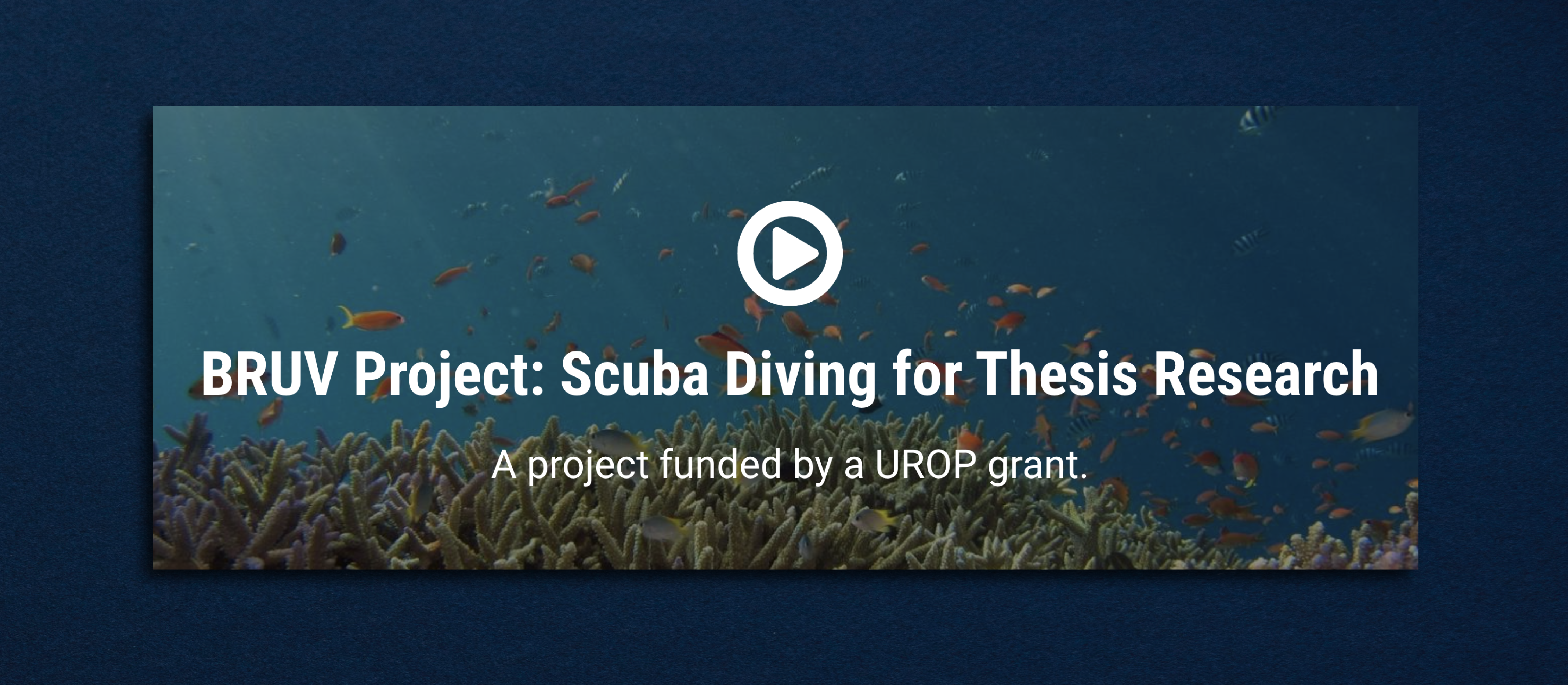
Another design choice was to integrate student stories, images, quotes and short films to show opportunities in-action. Our team of student creatives, which I manage, put together several films that highlight student research and creative work. I was also able to pull articles from Colorado Arts and Sciences magazine.
The result was a solid minimum viable product (i.e., “MVP”) that received positive feedback in student user tests, met acceptance criteria and was delivered in the proposed timeline.
PHASE III: DEPLOYMENT AND ONGOING ITERATION
During the deploy phase, the units’ experienced a change in executive leadership that delayed launch. Our team has opted to allow the deans a final round of edits so that it meets their vision for student success.
The site has analytics built in and I coordinated quality assurance measures that continue to test whether the MVP meets the specified requirements. We have also organized a marketing push that will drive initial traffic to the site and grow an organic audience.
By taking this iterative approach, we can now test the site’s effectiveness over the next year, make changes that improve the experience and, if necessary, pursue a more complex solution.
TEAM
Jaret Anderson
Videography
Cay Leytham-Powell
Layout Consultant, QA
Lily Board
Assistant Dean
A&S Academic Advising and Coaching
Kathy Noonan
Director, Student Engagement
Tim Grassley
Project Manager, Principal Designer
Alex Steele
Graphic Designer
 Tim Grassley