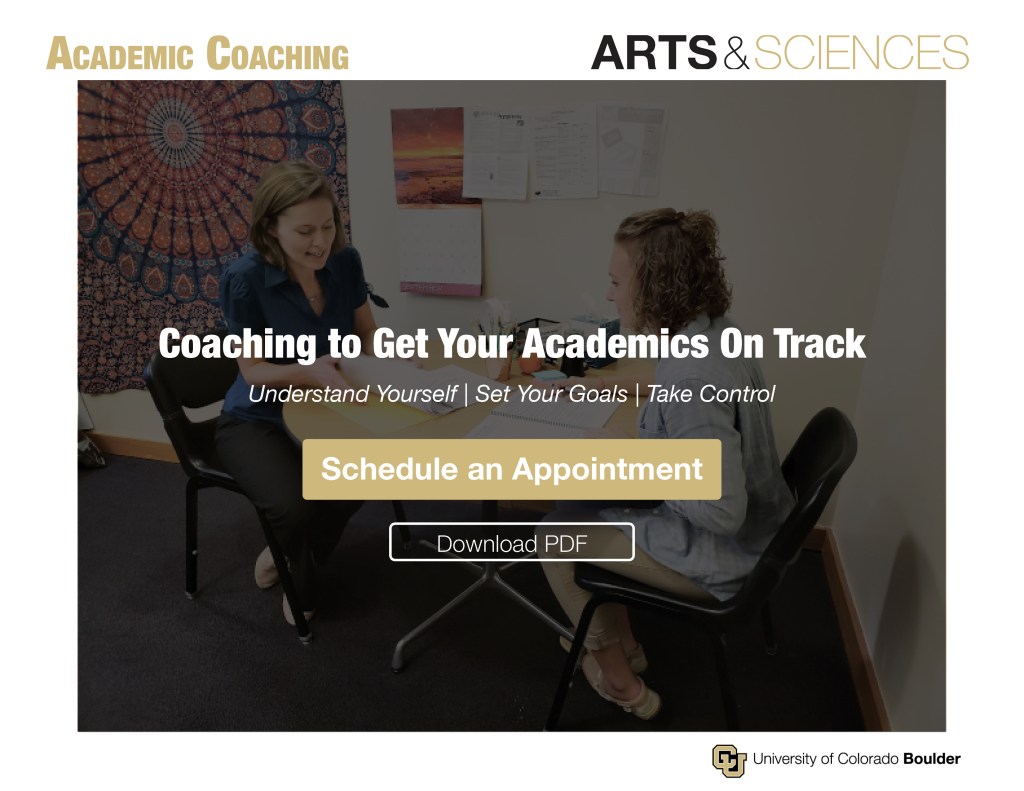
To distinguish our academic coaching team, we re-branded their program and developed a marketing strategy that advertised services based on the time of year students would seek them out.

About the project
Beginning with a brand workshop, we discussed the facets of the academic coaching program that the staff took the greatest pride in and the manner this work aligned with what they hoped their students achieved through the program. With a focused communication foundation in place, the team developed emails, blog articles, magazine articles, YouTube videos, workshops and print materials meant to widen campus awareness of the program and eventually lead interested stakeholders to seek them out. Our college supported their programming with email newsletters and social pushes as well.
Challenges
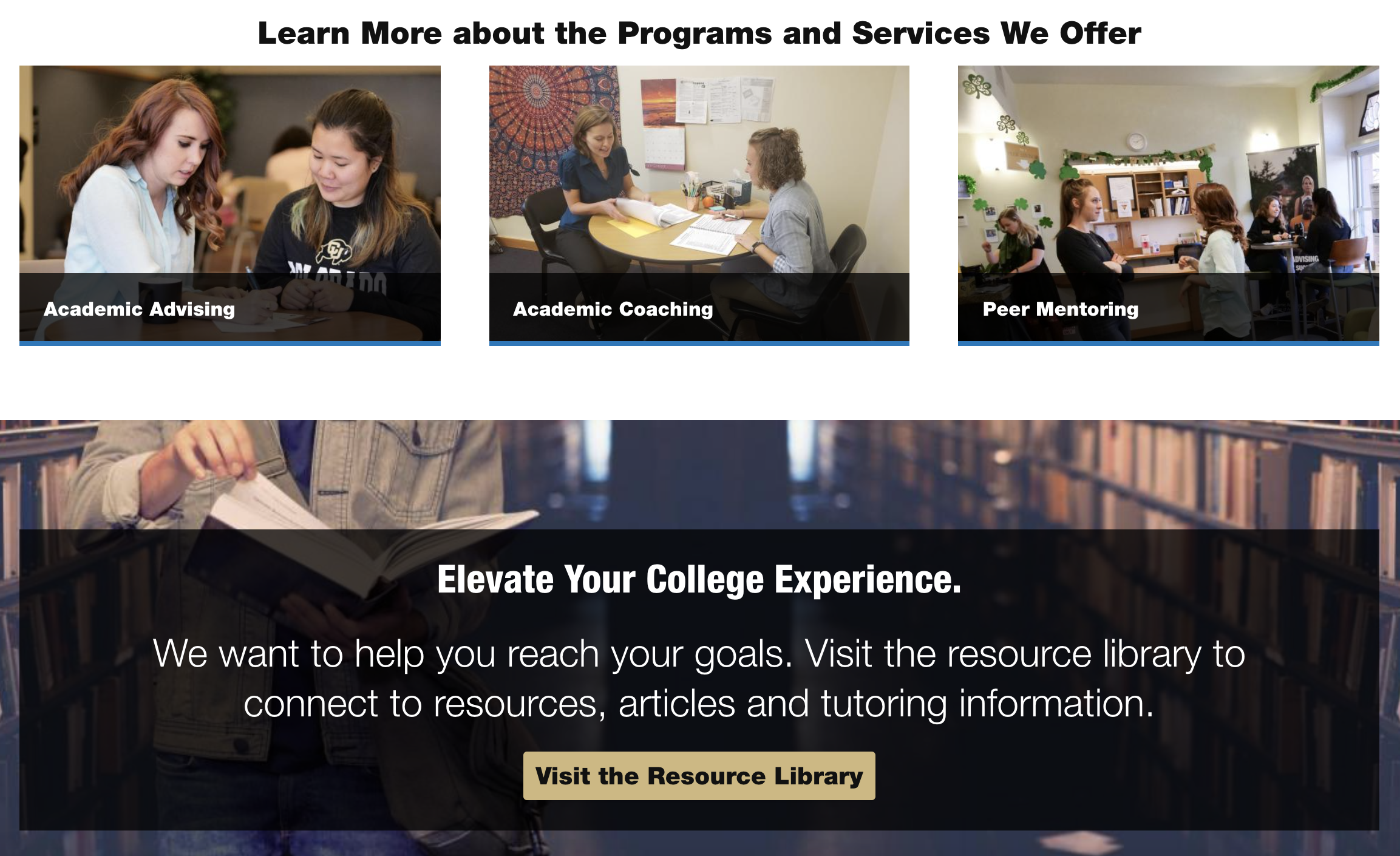
Academic coaching struggles to distinguish itself from academic advising. Both services draw on comparable strategies like goal setting, motivational interviewing, open-ended questioning and reflecting on students’ strengths. Previous communications focused on distinguishing between these fields. While these messages helped the teams reflect on their programming, an unfortunate side effect was spending too much time highlighting what each program was not, as opposed to what each did well.
Solutions
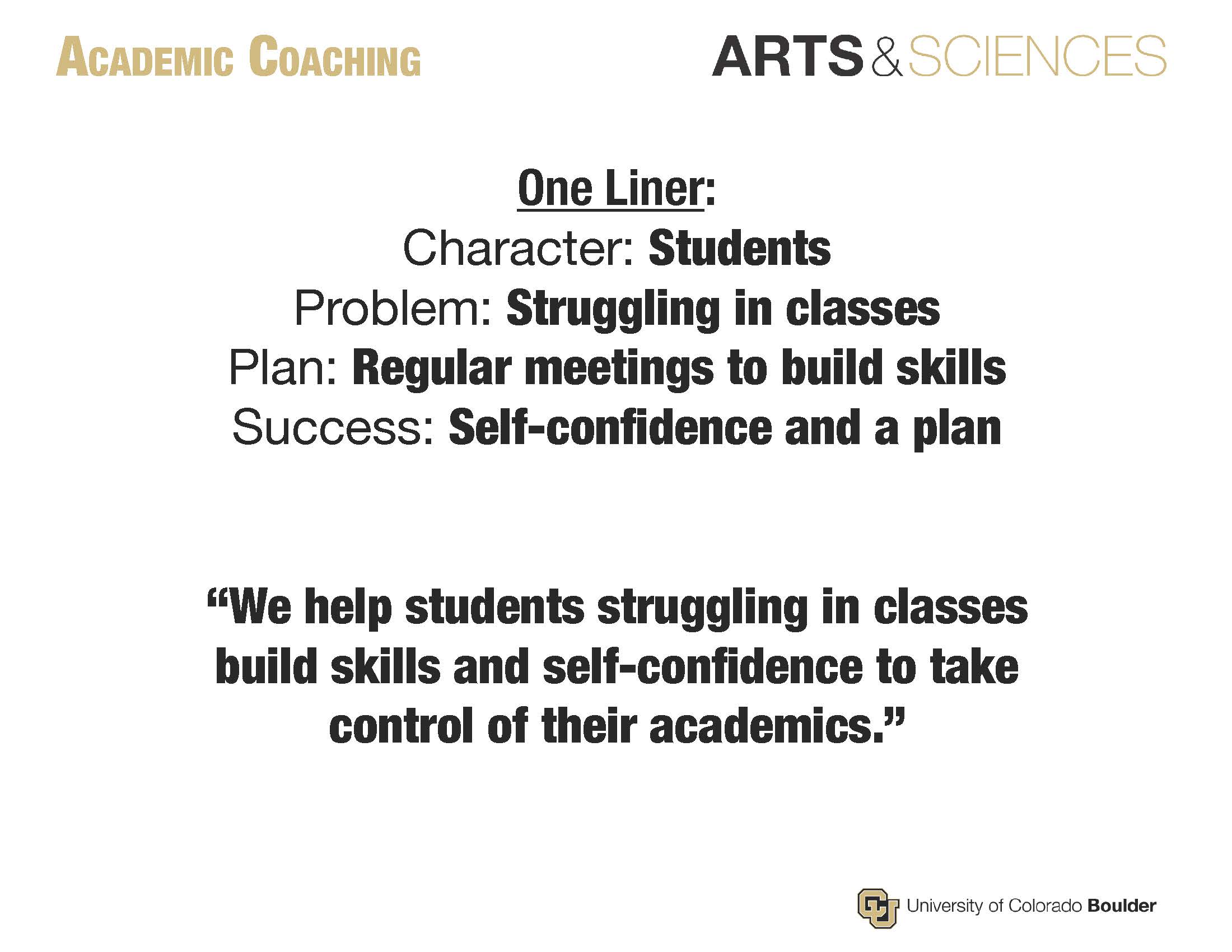
During our branding workshop, I encouraged the academic coaching team to stop defining their services in the negative and in juxtaposition to academic advising (e.g., stop using the phrase “This is how we’re different from advising.”). Instead, team members reflected on the type of growth and success they hoped their students would achieve. When their focus shifted to a more concrete vision for students’ success, they brainstormed programs and communications that helped move students closer to their objective.

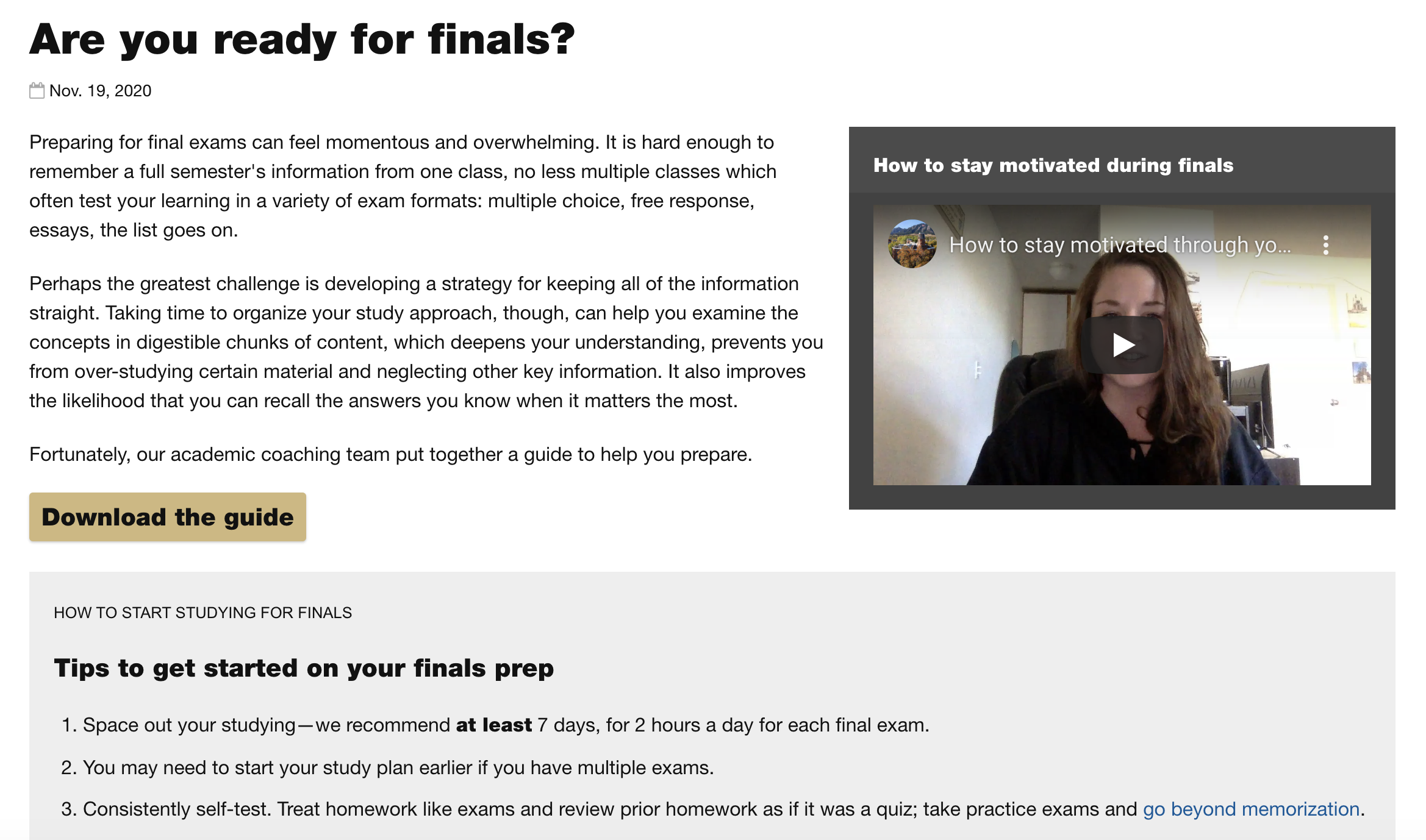
To drive organic traffic, the team continues to write articles and develop videos that I edit, format and publish in a Resource Library housed on the academic advising and academic coaching team’s site. I send weekly keyword analytics reports to the coaching team that indicate current student concerns, and I optimize articles and ads to improve organic search traffic. The team creates content to help address problems that appear to be driving users to the site. For example, the library saw increased traffic to articles focused on motivation and exams. The team developed an article, video and exam study guide that I published and highlighted in a newsletter.
Team
Eryn Elder
Assistant Director of Academic Coaching
Tim Grassley
Brand Manager
Audrey Blankenheim
Academic Coach
Brendan Griffiths
Academic Coach
Alicia Sepulveda
Academic Coach
Stephen Stitcher
Content Writer
Dani Hix
Academic Coaching Intern
 Tim Grassley