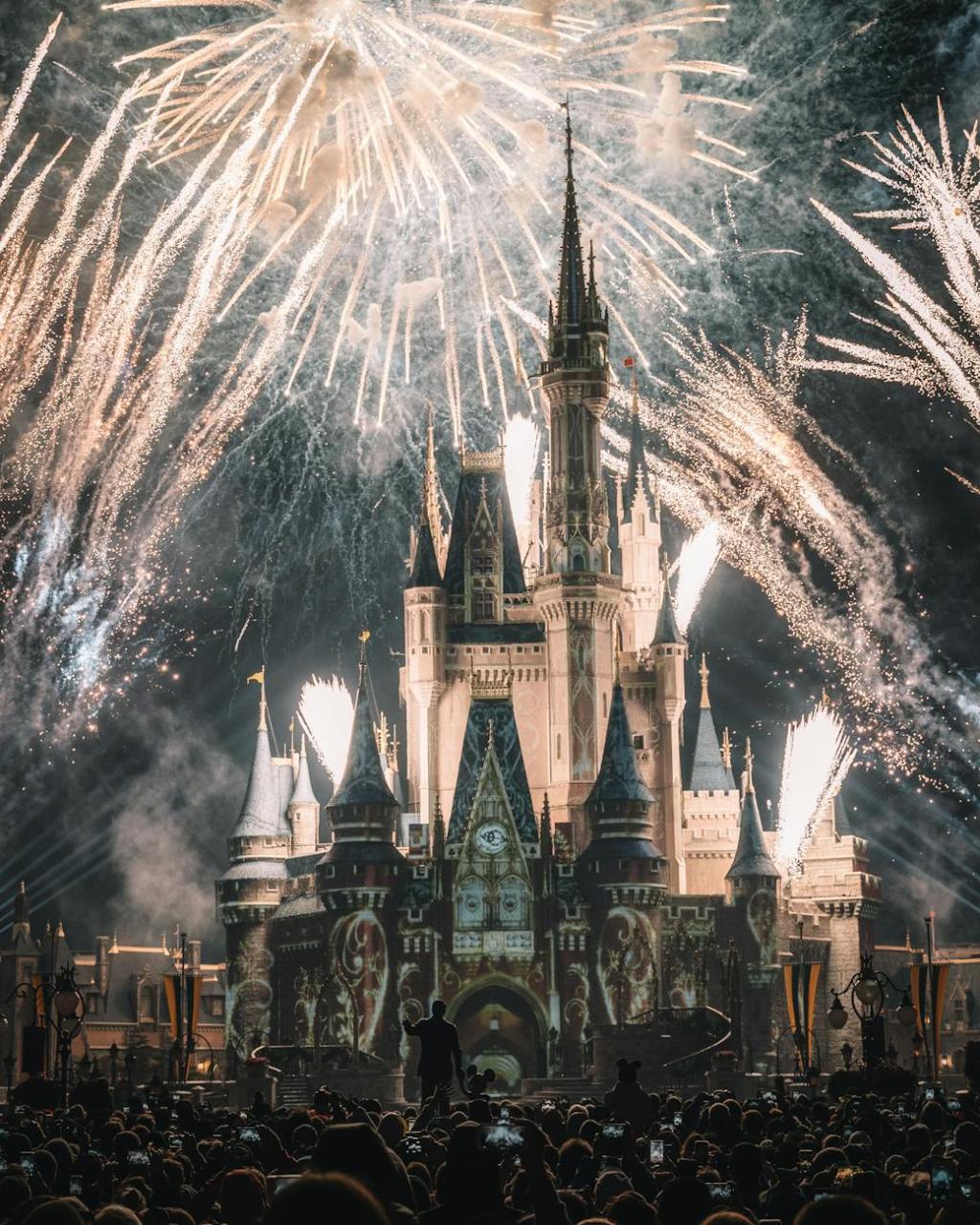
I love Disney. Their crafting of in-person experiences with attention to minutest detail is second to none. I study their decisions in light of my own marketing strategies and innovations, and I’ve spent much of the last two years diving into their approach to experience design (i.e., Imagineering).
Then I came across Daniel Currell’s exceptionally well-written essay reflecting on America’s declining middle class, as experienced at Disney World. Currell’s reporting is so good and compelling, but one line in particular caught my attention:
“What’s profitable today is not unification. It’s segmentation.”
Disney and the Decline of America’s Middle Class
Segmentation is marketing’s religion, and I’ve been a pupil of sorts since pivoting from academic advising in 2018. But something about this combination of marketing—giving audiences what they want/expect—and bottom-line-at-all-costs management does taste sour to me.
I am not a fan of the pay-to-play mentality broadly (e.g., jumping ski lift lines infuriates me), and I especially don’t like the connection to FoMo. Amplifying information by feeding a feeling we’re all perpetually missing out on a maximized experience seems like a way to win in the near term and slowly, quietly die over decades.
Note that the article assumes the rich kid’s experience is better because they get to ride more rides. It also assumes that waiting in line is implicitly bad. Yet when my family of four managed to work up the funds to finally experience Disney World, we generally didn’t think about waiting in line because we enjoyed hanging out in this weird environment and talking about what we’d seen. The app helped us expect, accurately, how long we’d wait, and we selected our rides accordingly. Rise of the Resistance is so great because waiting in line is part of the experience—you get to look at the storm troopers longer, get heckled by the staff more, physically feel the detail of the set on your way into the ride. You don’t just blast by on your way to something else.
Waiting, though, was frustrating when we saw the pay-to-players cut, and their cutting visibly made our wait time longer. This, in concrete terms, made the majority’s experience worse because the line’s momentum stalled while a few segmented folks got to feel like VIPs. The only other time a line stalls is when a ride breaks down. To me, fast passing and ride breakdowns are emotionally the same.
It’s a little like boarding an airplane and watching late first class flyers brought to the front of a line by attendants, drink in-hand. While their higher ticket helps Disney’s or an airline’s bottom line, it might actually make everything logistically worse (e.g., to serve the one, the plane’s going to take off later; to let the fast passer go on more rides, the majority hang around longer instead of, I don’t know, going to a drink stand or a store).
In my skiing experience, I got so frustrated with fast passing that I stopped going to a local resort with a high density of passers. It was just too much to see someone get on a lift, ski down and get back on the lift before me. The lean into unfair lost my business.
As I consider strategies that incorporate more experiences and try to work out the way higher ed’s pay-to-play and emphasis on audience segmentation has negatively hit our reputation among income earners categorized in the middle-lower classes, I’d rather what I design be open to and experienced by everyone, but documented uniquely. I have hope, now that we’ve played out this kind of gilded-first prioritization and seen it drive us apart, that we’ll tilt back toward experiences that unify.
Or, in the very least, get rid of fast passes. I hate those things.
 Tim Grassley